Abstract
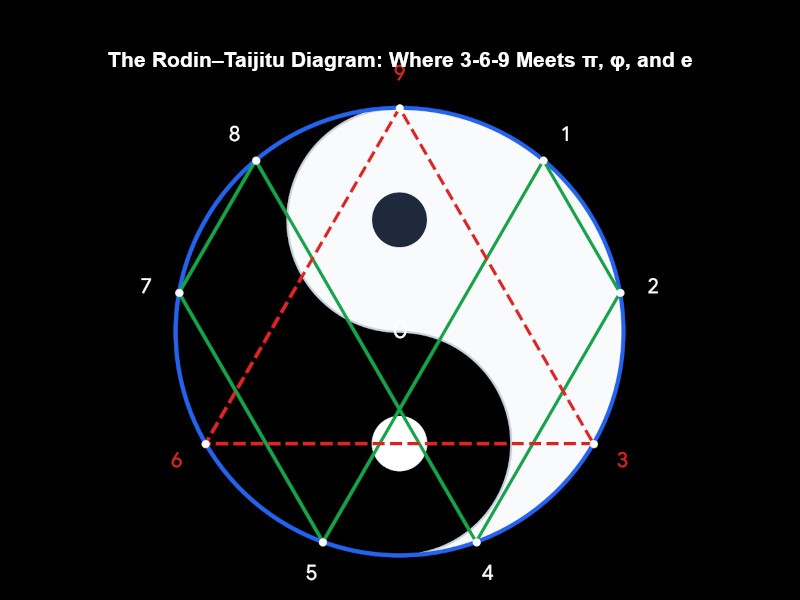
The 369 SORT WASTE method is a proposed universal standard for waste sorting designed to address the growing global challenges of waste management and recycling. Conceptualized by me as part of the EKO AB369 system, this method aims to unify the currently fragmented, localized sorting practices into a streamlined, mathematically inspired global standard. Grounded in vortex mathematics and the number theory popularized by Nikola Tesla, the method utilizes the numbers 3, 6, and 9 to define the number and types of waste fractions at various stages of sorting. This paper provides a brief overview of the 369 SORT WASTE method, its core assumptions, structural variables, and potential benefits for households and the recycling industry.
1. Introduction
The contemporary world faces a significant crisis in waste management. As global populations expand and consumption increases, the volume of waste generated continues to rise. Current waste management systems are often inadequate, suffering from a lack of uniform standards across different regions and countries. This localized approach to waste sorting creates inefficiencies in logistics, transport, and the processing of recyclable materials. The 369 SORT WASTE campaign advocates for a universal, global standard to replace the disparate methods currently in use, aiming to build a stronger, more efficient recycling industry and mitigate environmental pollution.
2. Theoretical Foundations
The 369 SORT WASTE method is unique in its integration of scientific and mathematical principles, specifically drawing from vortex mathematics and the theories of Nikola Tesla, who famously stated, "If you only knew the magnificence of the 3, 6 and 9, then you would have the key to the universe".
The foundation of the method is a universal linear equation that describes the flow and processing of waste:
X + Y + Z = 18
(where X = 3, Y = 6, Z = 9).
These variables represent the number of waste fractions required at different stages of the sorting process, from the household level to specialized collection points. By establishing these constants, the method provides a scalable and universally applicable framework for waste management.
3. The X, Y, Z Variables and Sorting Stages
The 369 SORT WASTE method structures waste sorting into three distinct categories based on the variables X, Y, and Z.
3.1 Variable X = 3 (Primary Household Sorting)
The most fundamental level of sorting occurs inside the home, typically in the kitchen. The method advocates for exactly three primary containers, simplifying the process to encourage compliance, especially among children and the elderly.
The three "X" fractions are:
This initial 3-step sorting is crucial. It simplifies the user experience compared to more complex systems (such as 5-bin systems) while providing a clean baseline for subsequent processing .
3.2 Variable Y = 6 (Secondary and Selective Sorting)
The "Y" variable represents six additional fractions. These can be sorted in other areas of the home (e.g., utility rooms, bathrooms) or at outdoor selective collection points (Waste Banks).
The six "Y" fractions for gezebos are:
plus
And another six “Y” fractions for Waste Banks are:
In the EKO AB369 system, users can choose from different service packages (MINI, MIDI, MAXI) based on how thoroughly they sort these fractions, with financial incentives for more detailed sorting.
3.3 Variable Z = 9 (Specialized and Industrial Sorting, ie. WCP)
The "Z" variable covers nine specific categories of waste typically generated during exceptional circumstances (e.g., renovations) or by commercial and industrial entities. These materials require specialized handling and collection.
The nine "Z" fractions include:
and
4. The EKO AB369 System and Implementation
The 369 SORT WASTE method is the operational core of the broader EKO AB369 system. This system envisions a comprehensive restructuring of waste logistics:
5. Conclusion
The 369 SORT WASTE method offers a compelling vision for a unified global waste management standard. By simplifying daily household sorting to three basic categories and providing a mathematically structured framework for all other waste types, it aims to reduce confusion, increase recycling rates, and improve the economic viability of the recycling industry. While its reliance on vortex mathematics is unconventional, the practical application of the X+Y+Z=18 formula provides a clear, scalable blueprint for mitigating the global waste crisis.
We offering a book available on AMAZON.